Connect with us

Business

80% Of Nigeria’s Oil Production Lost To Theft, Says Former Seplat Boss

Published

on

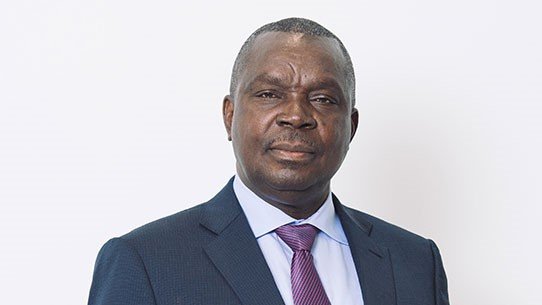
Former chief executive officer of Seplat Energy Plc, Austin Avuru, has lamented that 80 percent of Nigeria’s oil production is lost to oil theft.

Avuru, in a report, titled “Reining in the Collapse of the Nigerian Oil Industry” published by the Africa Oil+Gas Report, called for a state of emergency in the Nigerian oil and gas sector.

He urged regulators and the Nigerian National Petroleum Company (NNPC) to set up a “war room” strategy to develop a plan to return the oil sector to “full bloom”.

“With eyes fixed on divestments and exit, the IOCs have not made any meaningful investments in the last fifteen years,” he said.

“The result has not just been declining production. Much worse, the entire export pipeline network has been surrendered to vandals and illegal bunkerers. Thus, the phrase “Crude theft” which crept into the industry about 2010 has taken on a new meaning.

“There are some pipeline systems now (particularly in the East), where 80% (eighty percent) of production injected therein does not make it to the terminal!”

According to him, almost every producer is now cooking up “alternative evacuation” schemes that cost four to five times what pipeline export would normally cost!

“The stark reality today is that the IOCs are leaving. Their decision to leave is outside our control as a nation. In fact, over the last twelve years, Shell and Chevron have divested from a total of twenty-one blocks. It is now public knowledge that Shell and ExxonMobil are now exiting the onshore/shallow water altogether,” he said.

“In fact, my projection is that, by Christmas day of 2025, TOTAL would be the only IOC in J.V with NNPC.

“The situation is the same with domestic gas delivery. Even though we are weaving all the right slogans about the future of gas in Nigeria, in the past five years, I can only point at a couple of Nigerian independents who are investing in gas development and processing for the domestic market.

“The state of the NNPC Towers in Abuja, headquarters of the Nigerian oil industry: Just standing back and intervening by pre-emptive acquisitions cannot be a sustainable solution to the question of retreating IOCs Nigerian Petroleum Industry is a National Emergency. Oil production is down to about 1.4Million barrels per day and declining and this includes about 600,000BOPD from the deepwater.

“Domestic gas production has stagnated at about 1.2Billion cubic feet (Bcf) per day over the past five years at a time when projected production should have been 3.5Bcf per day. The collateral impact of course, is the low level of power generation which itself has stagnated at about 4,000Mega watts per day since 2015.”

Avuru added that the full impact of the current oil production level can only be imagined when oil prices return to the $60 per barrel level.

“I dare repeat that the situation has to be treated as a national emergency,” he said.

“Between the upstream regulator (the commission) and NNPC, they need to set up a “war room”, some form of an effective task force to develop a blueprint for returning the industry to full bloom. The responses we hear today to the myriad of problems outlined above have been ad-hoc, knee jerk and in some cases only self-serving.”

Avuru outlined some issues that must be addressed in the oil and gas sector.

“When IOCs leave a matured petroleum patch, independents, whether local or international, usually move in to inject fresh capital, run a nimble efficient operation and maximize production and reserves addition,” he added.

“A well-organised transition driven by a clear policy direction, from the retreating IOCs to a crop of efficient independents with the requisite resources will have to be implemented.

“Just standing back and intervening by pre-emptive acquisitions cannot be a sustainable solution proffered by NNPC.

“There has to be a deliberate policy-driven return to the traditional onshore/shallow water terrains. Eighty percent of our remaining reserves are still in this belt.

“To do this, we have to address the twin problems of reliable pipeline evacuation and community restiveness. These problems have become heightened, not because there is no solution, but because we have abandoned every attention to them in the last fifteen years.

“When these two problems are tackled, plus a strict application of the “drill or drop” provisions of the new PIA, huge investments in drilling and facilities revamp will flow again into this terrain.

“Finally, we have to match our gas slogans with effective, measurable, policy actions to drive investments in domestic gas supply. The current flip-flops on pricing and commercial structure of the gas business cannot stimulate investments in the sector.

“This industry will not wake up by God’s miracle. We have to wake up and design the stimulant that will revitalise it.”

The Nigerian Upstream Petroleum Regulatory Commission (NUPRC) had said the country loses more than 115,000 barrels per day to oil theft and vandalism.

Click to comment

Leave a Reply

Your email address will not be published. Required fields are marked *

Business

NAICOM Partners UNDP To Scale Insurance Innovation, Climate Risk Resilience

Published

on

By

The Commissioner for Insurance, Mr. Olusegun Omosehin, received a delegation from the United Nations Development Programme (UNDP) on a courtesy visit to the National Insurance Commission (NAICOM), aimed at deepening collaboration and setting strategic priorities to expand insurance access, enhance market stability, and scale climate and disaster risk solutions across Nigeria.

Speaking during the visit, the UNDP Regional Specialist, Mr. David Mueller, expressed appreciation for the Commission’s leadership and reaffirmed UNDP’s commitment to supporting Nigeria’s insurance sector. He highlighted UNDP’s interest in scaling the Lagos Flood Risk Insurance Model, strengthening systemic capacity, including actuarial development and enabling insurers to mobilize domestic capital for sustainable investment.

The UNDP delegation also pledged continued support for the implementation of ongoing reforms in the Nigerian insurance industry, drawing on lessons learned from previous UNDP supported projects within the sector.

In his response, the Commissioner for Insurance welcomed the UNDP team and expressed gratitude for their sustained support to the Nigerian insurance industry. He outlined five strategic pillars underpinning NAICOM’s reform agenda and reiterated the Commission’s commitment to a transparent recapitalization process, fostering innovation, and creating an enabling environment to significantly enhance insurance penetration in Nigeria.

The Commissioner noted that the recently enacted Nigerian Insurance Industry Reform Act (NIIRA) 2025 provides a robust legal framework for strengthening consumer protection, enhancing regulatory capacity, improving financial soundness, promoting innovation and sustainability, and expanding market access and penetration.

He further explained that the ongoing industry recapitalization exercise, with the first phase scheduled to conclude on 31 July 2026, is designed to reinforce the financial stability and resilience of insurance institutions. To support operators, NAICOM has established dedicated support mechanisms, including a Recapitalization Committee, to guide the process.

The Commissioner also affirmed NAICOM’s commitment to institutionalizing Environmental, Social, and Governance (ESG) principles and sustainable insurance practices through the development of an in house NAICOM ESG Framework, building on prior diagnostic work and toolkits developed in collaboration with partners such as FSD Africa and UNDP.

Both parties agreed on the urgent need to rapidly scale actuarial capacity across the insurance industry through coordinated systemic capacity building initiatives, including the GAIN programme and strategic partnerships with actuarial service providers.
The meeting further explored options to revive and advance a national catastrophic insurance scheme, to be implemented collaboratively by NAICOM, UNDP, and relevant disaster management agencies, including the National Emergency Management Agency (NEMA).

Continue Reading

Business

NIA To Honour Past Governing Council Members

Published

on

By

The Nigerian Insurers Association (NIA) has announced plans to honour its past governing council members and director general, in recognition of their invaluable contributions to the growth and development of the association.

This initiative underscores the association’s deep appreciation for the visionary leadership, dedication, and selfless service of those who have steered the affairs of the NIA over the years. Their efforts have laid a solid
foundation for the association’s achievements and strengthened its role as the collective voice of the insurance industry.

The event is scheduled to take place on April 30 in Lagos, under the theme, “Service as the Cornerstone of Leadership and Institutional Legacy.”

Speaking on the significance of the initiative, the Chairman of the NIA, Mr. Kunle Ahmed, noted that honouring past governing council members and director generals is not only a mark of respect, but also a way of preserving the association’s rich legacy.

He said that their guidance and commitment have been instrumental in shaping policies, fostering industry collaboration, and promoting public confidence in insurance as a tool for national development.

Ahmed emphasised that the structures laid down by the past leaders, the values they upheld, and the sacrifices they made continue to resonate in the association’s present achievements.

He said: “Institutions are built over time, but their true strength lies in the people who devote themselves in service.

“This event is our way of pausing to honour those whose leadership and sacrifices created the pathway we now walk. Their legacy is not confined to history—it lives on in every milestone we celebrate today.”

The NIA Chairman further stated that by celebrating the association’s past leaders, the NIA preserves its history, reinforces its values, and set a clear benchmark for future leadership.

According to him, the progress the association enjoy today is firmly anchored in the foresight and dedication of its past leaders.

“Without question, they remain the bedrock of the NIA’s enduring relevance and success, he said.”

The ceremony will bring together industry stakeholders, regulators, and partners to celebrate these distinguished leaders and reaffirm the Association’s commitment to excellence, innovation, and sustainable growth.

Continue Reading

Business

Heirs Insurance Partners United Capital On Self-care, Wealth Event

Published

on

By

Heirs Insurance Group and United Capital Plc, recently hosted the Yoga and Money Meet Up, an exclusive wellness and financial empowerment event for ambitious women.
The event, which held in Lagos, offered a curated experience combining guided yoga and stress management sessions with expert-led conversations on insurance, investment and asset protection. The event reinforced Heirs Insurance Group’s and United Capital’s commitment to making financial wellness relevant and accessible to Nigerian women.
Speaking on the initiative, Ifesinachi Okoli-Okpagu, Chief Marketing Officer at Heirs Insurance Group, underscored the strong link between insurance and wellness. “Self-care is not just about indulgence; it is about making deliberate choices that safeguard one’s physical, mental, and financial well-being – and insurance is fundamental to that. For many women juggling careers, businesses, and family, this event addresses a significant pain-point: how we protect our assets while still juggling life”.
She introduced HerMotor insurance plan, designed for ambitious women who need more than just insurance. The unique product offers comprehensive motor coverage against accidents, fire, theft, and other unforeseen incidents that cause loss to the policyholder’s car. An added benefit is the 24/7 emergency roadside assistance for female car owners during car breakdowns arising from accidents or mechanical faults. The first-of-its-kind solution in the industry is delivered in partnership with AA Rescue, and includes a robust reward programme, where customers can access discounts from spas, wellness programmes, and more.
Dr. Odiri Oginni, Managing Director, United Capital Asset Management, added that the collaboration reflects a shared commitment to women’s empowerment. “Empowerment is at the core of what we do, and co-creating on an initiative that directly addresses the financial realities facing Nigerian women further emphasises this. We recognise that financial independence and personal wellness are deeply interconnected, and by creating opportunities that bring both together, we are reinforcing our commitment to empowering women to confidently pursue and achieve their dreams. This vision informed the creation of our Wealth for Women Fund, which provides women with a secure and accessible avenue to invest smartly and build long-term financial security.”
The Yoga and Money Meet Up reflects a joint vision to empower Nigerian women through financial education and protection.
Heirs Insurance Group is the insurance subsidiary of Heirs Holdings, the leading pan-African investment company, with investments across 24 countries and four continents. With a rapidly expanding retail footprint and an omnichannel digital presence, Heirs Insurance Group serves both corporate and individual customers across Nigeria.
United Capital Plc is a leading Pan-African financial and investment services group providing bespoke, value-added solutions to governments, corporations, and individuals across Africa. With operations in Nigeria, Ghana, and Côte d’Ivoire, and a growing pan-African footprint, the Group leverages technology, specialist expertise, and retail-led platforms such as InvestNow to deliver cutting-edge financial solutions. United Capital has been recognised by the Financial Times as one of Africa’s fastest-growing companies for three consecutive years.

Continue Reading