Connect with us

Business

Insurers Tasked To Mitigate Socio-Political Risks

Published

on

Barr. (Mrs.) Ekeoma Ezeibe, Discussant (left), Mr. Olusegun Omosehin, Chairman, CIIN Education Committee, Mrs. Yetunde Ilori, CIIN Deputy President, Mr. G.U.S. Wiggle, Keynote speaker and Mrs. Abimbola Tiamiyu, CIIN Registrar, at the Institute Education Seminar in Port-Harcourt, Rivers State on Friday.

By Sola Alabadan

The insurance operators in Nigeria have been charged to be alive their responsibility to mitigate the socio-political risks that can impede social progress and economic growth in the country.
Insurance stakeholders who spoke at the Education Seminar of the Chartered Insurance Institute of Nigeria (CIIN) in Port-Harcourt, Rivers State on Friday, opined that in a country like Nigeria, where socio-political challenges often intersect with economic uncertainties, the insurance industry can play a vital role in safeguarding the interests of individuals, businesses, and the nation as a whole.
The theme of the seminar is “Socio-Political Risks: The Role of the Nigerian Insurance Industry”.
While welcoming to the seminar, the President/Chairman of Council, Edwin Igbiti, affirmed that Nigeria, being Africa’s most populous nation and a key player in the African economy, faces an array of socio-political risks that can impede social progress and economic growth. These risks range from political instability, ethnic tensions, terrorism, civil unrest, to government policies and regulations, among others.
Igbiti, who was represented by the Deputy President, Mrs. Yetunde Ilori, added that the role of the insurance industry in addressing socio-political risks is multi-faceted.
“The insurance industry can act as a catalyst for risk prevention and reduction. By actively assessing and evaluating potential socio-political risks, insurers can collaborate with governments, businesses, and communities to develop risk management strategies and enhance resilience. Through initiatives such as risk education programs, capacity building, and partnerships with relevant stakeholders, the industry can contribute to societal awareness and preparedness, reducing the likelihood and impact of socio-political risks,” the CIIN boss said.
Similarly, the Chairman, CIIN Education Committee, Mr. Olusegun Omosehin stated that in today’s rapidly changing world, understanding and effectively managing socio-political risk has become more important than ever before.
He therefore advised that “Insurers should spread the gospel of mitigating risk across Nigeria, a country with a population exceeding 200 million and a diverse range of socio-political factors at play. Understanding and navigating these complexities is crucial for the sustainable growth and development of the Nigerian insurance industry.”
Meanwhile, the Keynote speaker, Mr. G.U.S. Wiggle, encouraged insurers to tackle the challenges facing the industry for the purpose of opportunities therein, saying “Insurance companies can offer political risk insurance to businesses to help them manage and mitigate risks arising from the adverse actions or inactions of governments. Political risk insurance can help provide a more stable environment for investments and unlock better access to finance.”
He added that the insurance companies should provide financial stability and reduce uncertainty by indemnifying those who have suffered losses.

Click to comment

Leave a Reply

Your email address will not be published. Required fields are marked *

Business

Leadway Assurance Partners AGRA, NADF, Verdure Climate To Advance Agricultural Insurance Solutions

Published

on

By

Leadway Assurance Company has forged partnership with Alliance for a Green Revolution in Africa (AGRA), the National Agricultural Development Fund (NADF), and Verdure Climate, to lead a national dialogue on identifying challenges and proffering actionable solutions on agricultural and climate risks in Nigeria.
The forum themed “Accelerating Agricultural Lending to Market Actors and Smallholder Farmers Using Index-Based Agric Insurance & Blended Finance Solutions,” held in Abuja recently.
In attendance at the forum were policymakers, financial institutions, agribusiness leaders, development experts, and critical value-chain actors, to examine scalable models capable of strengthening Nigeria’s agricultural resilience.
Recent data shows that over 82 percent of Nigerian farmers remain uninsured (Phys.org, 2024), while projections warn that climate-induced disruptions could cut Nigeria’s agricultural productivity by 10–25 percent by 2080, with some rain-dependent regions facing losses of up to 50 percent (IOSR Journal, 2024; ScienceDirect, 2025).
Against this backdrop, the dialogue provided a timely platform for advancing integrated solutions that combine insurance, credit, and climate-risk financing.
Speaking at the event, Ayoola Fatona, Global Head, Agriculture Risk Solutions, Leadway Assurance, reaffirmed the organisation’s commitment to financial inclusion and agricultural transformation. “We are in a mission to make insurance a catalyst for productivity by ensuring farmers can access credit, adopt climate-keen practices, and recover quickly from weather-related shocks. Collaborating with AGRA, NADF, and Verdure Climate allows us to co-create solutions that strengthen the entire value chain and secure the future of our food systems.”
In his opening address, Fatona underscored the urgency of building systems that empower farmers and de-risk financiers.
He noted that “the dialogue forms part of our AGRA-supported initiative to build farmers’ resilience through innovative insurance models and financial instruments across Niger, Kaduna, and Nasarawa States. As climate risks intensify, our responsibility extends beyond underwriting; we must become enablers of productivity, inclusion, and long-term stability. Index-based insurance, when integrated with blended finance structures, creates the transparency, speed, and scalability needed to unlock credit for market actors and smallholder farmers alike.”
He added that the collaboration among government, insurers, financiers, and development partners is essential to translating innovation into real impact for farmers, the maize grower in Nasarawa, the rice producer in Niger, and the aggregators supporting thousands across Kaduna.
Leadway Assurance has been investing in strengthening Nigeria’s agricultural insurance framework through initiatives such as index-based crop insurance, public-private partnerships with state governments, and capacity-building programmes for rural farming communities. Between 2024 and 2025, Leadway has supported interventions that expanded coverage for thousands of smallholder farmers across multiple states, contributing to improved financial stability and agribusiness continuity.

Continue Reading

Business

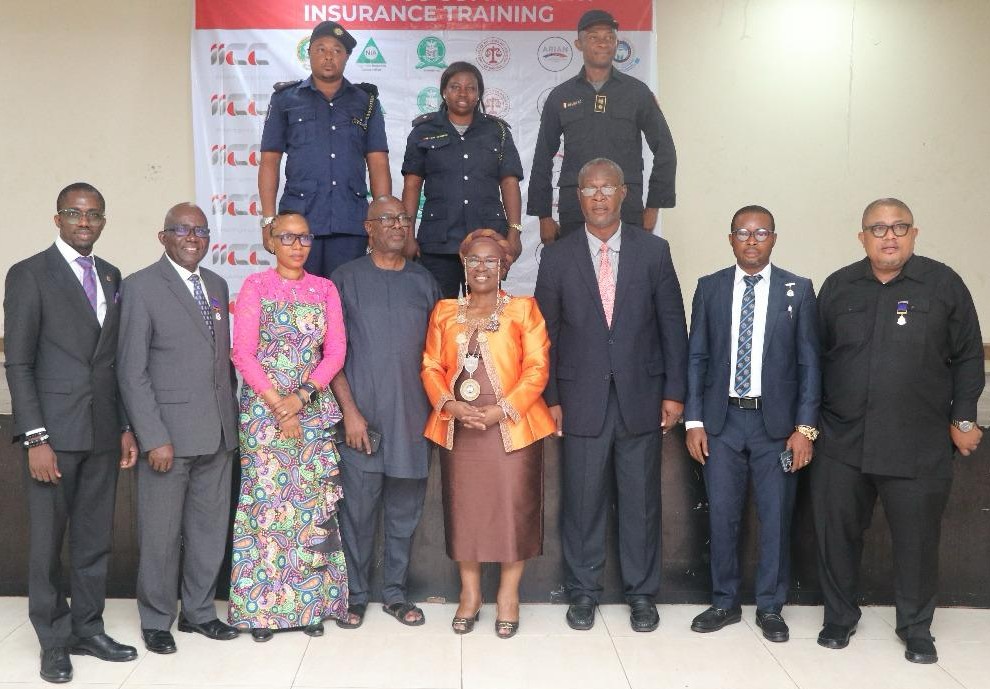
IICC Trains Enugu Workers On Compulsory Insurances

Published

on

By

As part of efforts to promote insurance awareness and penetration throughout the country, the insurance industry has organised insurance training session for workers in Enugu State.

President Bola Tinubu, signed the Nigerian Insurance Industry Reformed Act (NIIRA) 2025 into law in July 2025. The Act is expected to reform the insurance industry, ensure Nigerians enjoy the benefits of insurance which is a catalyst to growing the Nigerian economy.

To this end, the Insurance Industry Consultative Council (IICC) under the leadership of its Chairman. Mrs. Yetunde Ilori, led all arms of the industry, including NAICOM, NIA, NCRIB, ILAN, ARIAN and CIIN to Enugu where the delegates from various ministries of the State Government were educated about the benefits of embracing insurance.

Mrs. Ilori said that the industry thought it was necessary for Enugu to feel the industry, noting that the State Government under the leadership of the Governor, Peter Mbah has been so involved promoting compulsory insurances in the State. She also appreciated the Government for supporting the training by approving the attendance of its workers.

The President of ILAN, Mr. Ikechukwu Udobi addressed the delegates as being privileged to have been selected out of many to attend the training.

Speaking on behalf of the Government, the Secretary to the State Government, Professor Chidebere Onya appreciated the industry for deeming it fit to train the citizens of the Coal City State on benefits of insurance. He stated that insurance is indeed a catalyst to growing the State’s economy and the Government is definitely going to take advantage of this.

The delegates applauded the IICC for the thoughtful training with the caliber of experienced experts who delivered several informative and innovative papers on compulsory insurances.

Mr. Tope Adaramola, who represented the NCRIB acknowledged the faculties and the delegates for their contributions towards the success of the training, submitting that the IICC is so expectant of feedback from the training and hoping see the economy of Enugu grow through the adoption of compulsory insurances.

Continue Reading

Business

Sovereign Trust Insurance To Raise N5bn Through Rights Issue

Published

on

By

The Board of Directors of Sovereign Trust Insurance Plc, chaired by Mr. Abimbola Oguntunde, has approved an initial capital raise of N5 billion through a Rights Issue, says the management of the insurance company.

This represents a strategic first step in the company’s phased recapitalisation agenda, undertaken in alignment with the requirements of the Nigerian Insurance Industry Reform Act (NIIRA) recently signed into law by President Bola Tinubu.

The NIIRA framework mandates stronger capital buffers and enhanced solvency positions across the insurance sector, reinforcing the need for proactive capital planning by responsible operators.

The Rights Issue is projected to be completed within the first quarter of 2026. In line with global best practice, the Company has commenced structured engagements with all appointed professional parties, including issuing houses, legal advisers and auditors, and is currently finalising the necessary regulatory approvals prior to the formal opening of the offer to shareholders.

At the company’s 30th Annual General Meeting held on 25 September 2025; shareholders approved a set of key resolutions designed to strengthen Sovereign Trust Insurance Plc’s strategic and financial position. Chief among these was the endorsement of a capital raise of up to N20 billion to reinforce the balance sheet, improve liquidity buffers, and expand underwriting capacity in line with the heightened capital expectations introduced under the NIIRA regime.

Shareholders also approved the payment of a 5 kobo dividend per share, affirming confidence in the Company’s financial discipline and commitment to sustained value creation.

The market responded positively to these developments, with the Company’s stock emerging among the top gainers on the Nigerian Exchange (NGX) over several trading sessions in October 2025 – a clear indication of growing investor confidence and the strength of the Company’s operational fundamentals.

Commenting on this development, the Managing Director/Chief Executive Officer, Mr. Olaotan Soyinka, reiterated Management’s resolve to position the company among the top five insurers in Nigeria – a target aligned with industry benchmarks for operational efficiency, premium growth, and digital service delivery.

He encouraged shareholders to participate fully in the Rights Issue when it opens, noting that the Company remains firmly committed to innovation, digital transformation, market agility, and underwriting excellence.

According to him, these pillars are critical for sustaining long-term performance, improving customer experience and consolidating the Company’s position in a rapidly evolving insurance landscape.

Continue Reading