Connect with us

Business

Igbiti Becomes President Of CIIN July 15

Published

on

Barring any unforseen circumstances, Edwin Igbiti will be inaugurated as the 51st President/Chairman of Council of the Chartered Insurance Institute of Nigeria (CIIN) in Lagos on July 15.
He will be succeeding Sir (Dr.) Muftau Oyegunle.
In his quest for knowledge, Igbiti obtained an Advanced Diploma in Management from the Department of Business Administration, University of Lagos in 1996 and a Master’s Degree in Business Administration (MBA) from the University of Ado Ekiti, in 2005.
Similarly, he has garnered professional certifications both within and outside Nigeria such as Executive Leadership Programme of Howard University School of Business and Chief Executive and Directors Programme from the Management School in London.
Igbiti is a Certified Insurance practitioner with the Chartered Insurance Institute of London (CII), a Fellow of the Chartered Insurance Institute of Nigeria (FIIN), a Fellow of the Risk Managers Society of Nigeria (RIMSON), Associate of the Nigerian Council of Registered Insurance Brokers (NCRIB) and a Fellow of the Risk Surveyors Association of Nigeria (RISAN).
He is a seasoned professional with depth and wealth of technical expertise having worked in various capacities, including underwriting, sales and claims management in the insurance industry.
He started his professional sojourn at Phoenix Insurance Company as an Underwriting Trainee before moving to AIICO Insurance Plc where he worked for several years and provided managerial, strategic and operational leadership in uniquely challenging situations with verifiable evidence of achieving revenue, profit and business growth objectives.
He served as the General Manager, Non-Life Underwriting at AIICO Insurance Plc between January 2010 to September 2013. During this period, he was responsible for the overall performance of the General Insurance Division. He rose to the position of the Group Managing Director/Chief Executive Officer, AIICO Insurance Plc in Year 2013 where he was responsible for running and supervising the affairs of the Company and its subsidiaries (AIICO Pension, AIICO Capital and AIICO Multishield). In the years he served as the GMD of AIICO, he recorded giant strides which contributed hugely to the company’s overall growth.
Mr. Igbiti also served briefly as the Managing Director of Niger Insurance Plc before moving to Quicklink Insurance Brokers Limited as a top management staff where he is active till date.
Aside from being an insurance professional, Edwin is a chartered member of the Nigerian Institute of Management, a certified Business Continuity Systems Lead Auditor from the British Institute, UK and an alumnus of the Howard University Business School, U.S.A. He is a Member of the Institute of Directors (IoD), and was once a Council member of the Nigerian Insurers Association (NIA). He is the immediate past Chairman of the Governing Board of the College of Insurance and Financial Management and he currently seats as the Deputy President on the Governing Council of the Chartered Insurance Institute of Nigeria (CIIN) where he has meteorically risen to the 51st President of the Institute.
Igbiti is a devoted Christian and actively involved in the service of the Lord. He has a Diploma in Theology from the Redeemed Christian Church of God Bible College.
He is happily married and blessed with children.

Click to comment

Leave a Reply

Your email address will not be published. Required fields are marked *

Business

PenCom Reads Riot Act To Pension Defaulters, Trains Recovery Agents

Published

on

By

The Director General of the National Pension Commission (PenCom), Ms. Omolola Oloworaran, has announced that PenCom has ushered in a new era of zero tolerance for pension defaults with accredited Recovery Agents serving as the cornerstone of Nigeria’s social contract with its workers.
Ms. Oloworaran represented by the Commissioner Inspectorate of the Commission, Hon. Samuel Chigozie Uwandu stated this during an intensive Training Workshop for accredited Recovery Agents held in Lagos on 2 December 2025. The training marked a renewed nationwide compliance push to recover outstanding pension contributions and penalties from employers who persistently violate the Pension Reform Act (PRA) 2014, which mandates remittance of pension contributions within seven working days of salary payment.
The workshop, attended by enforcement officers, resource persons and pension industry stakeholders, outlined new strategic initiatives that will strengthen enforcement efforts, deepen inter-agency collaboration, and empower recovery agents to tackle non-remittance of pension contributions with greater precision and authority.
Speaking further at the workshop, the Director General reaffirmed PenCom’s commitment to enforcing strict compliance across the pension industry.
PenCom currently engages Recovery Agents to audit defaulting employers, calculate outstanding pension liabilities, issue demand notices, and facilitate recovery of unremitted pension contributions. Recovery Agents’ work has been instrumental in enforcing compliance since the start of the recovery exercise in 2012.
PenCom data shows that the Commission has cumulatively recovered ₦32.27 billion, comprising ₦15.87 billion in principal contributions and ₦16.40 billion in penalties from defaulting employers between June 2012 and September 2025.
In addition, PenCom recorded significant compliance gains in the third quarter of 2025 alone, recovering ₦2.06 billion (₦775 million principal and ₦1.27 billion penalties) from 49 defaulting employers, reflecting a sustained surge in enforcement activities.
Ms. Oloworaran told the workshop participants that despite the successes of the Contributory Pension Scheme (CPS), persistent defaults by employers threaten the fundamental purpose of the system.
“Every unremitted Naira represents a broken promise to a Nigerian worker,” she said. “This Commission has moved from promoting voluntary compliance to mandating enforced compliance. The era of impunity is over.”
She recalled that the appointment of Recovery Agents followed a competitive, transparent selection process, reflecting PenCom’s confidence in their capacity, professionalism, and integrity. She reminded participants that they are the “operational arm of PenCom’s enforcement will” and are critical to PenCom’s strategy to safeguard workers’ retirement savings.
The Director General outlined several bold initiatives forming PenCom’s expanded enforcement architecture, including forming stronger partnerships with key regulatory bodies such as the Corporate Affairs Commission (CAC), Federal Inland Revenue Service (FIRS) and other relevant agencies. Under these partnerships, employers’ compliance with the PRA 2014 will influence their standing with these bodies. The DG noted that defaulting employers will face consequences beyond PenCom, as non-compliance may affect business operations, access to government services, and regulatory privileges.
PenCom DG also brought to the attention of the participants the newly executed Memorandum of Understanding (MoU) with the Independent Corrupt Practices and Other Related Offences Commission (ICPC), which empowers ICPC to hold the management of recalcitrant employers personally accountable, making pension defaults a matter with potential criminal implications.
“This MoU is a decisive step to give teeth to our recovery efforts,” the DG stated. “No employer should imagine that withholding workers’ pensions is without consequences.”
The training modules delivered at the workshop were designed to deepen RAs’ skills in employer audit and compliance assessment; liability computation and negotiation; documentation and evidence management; engagement protocols under PenCom’s new enforcement architecture and use of enhanced digital compliance tools and reporting systems.
Participants were also briefed on PenCom’s internal reforms aimed at ensuring faster processing of reports, better coordination between departments, and stronger monitoring of ongoing recovery activities.
The DG concluded her remarks with a powerful charge to the Recovery Agents:
“You are the ambassadors of this new resolve, an Act with unwavering ethical standards, exercise professional care, and be relentless in securing what is rightfully due to the Nigerian worker.”
She said that PenCom stands fully behind the agents and will provide all necessary institutional support to ensure that every kobo owed to Nigerian workers is recovered.
The workshop ended with a renewed sense of mission as PenCom and its accredited Recovery Agents prepare to intensify nationwide compliance activities throughout 2026 and beyond.

Continue Reading

Business

Leadway Assurance Partners AGRA, NADF, Verdure Climate To Advance Agricultural Insurance Solutions

Published

on

By

Leadway Assurance Company has forged partnership with Alliance for a Green Revolution in Africa (AGRA), the National Agricultural Development Fund (NADF), and Verdure Climate, to lead a national dialogue on identifying challenges and proffering actionable solutions on agricultural and climate risks in Nigeria.
The forum themed “Accelerating Agricultural Lending to Market Actors and Smallholder Farmers Using Index-Based Agric Insurance & Blended Finance Solutions,” held in Abuja recently.
In attendance at the forum were policymakers, financial institutions, agribusiness leaders, development experts, and critical value-chain actors, to examine scalable models capable of strengthening Nigeria’s agricultural resilience.
Recent data shows that over 82 percent of Nigerian farmers remain uninsured (Phys.org, 2024), while projections warn that climate-induced disruptions could cut Nigeria’s agricultural productivity by 10–25 percent by 2080, with some rain-dependent regions facing losses of up to 50 percent (IOSR Journal, 2024; ScienceDirect, 2025).
Against this backdrop, the dialogue provided a timely platform for advancing integrated solutions that combine insurance, credit, and climate-risk financing.
Speaking at the event, Ayoola Fatona, Global Head, Agriculture Risk Solutions, Leadway Assurance, reaffirmed the organisation’s commitment to financial inclusion and agricultural transformation. “We are in a mission to make insurance a catalyst for productivity by ensuring farmers can access credit, adopt climate-keen practices, and recover quickly from weather-related shocks. Collaborating with AGRA, NADF, and Verdure Climate allows us to co-create solutions that strengthen the entire value chain and secure the future of our food systems.”
In his opening address, Fatona underscored the urgency of building systems that empower farmers and de-risk financiers.
He noted that “the dialogue forms part of our AGRA-supported initiative to build farmers’ resilience through innovative insurance models and financial instruments across Niger, Kaduna, and Nasarawa States. As climate risks intensify, our responsibility extends beyond underwriting; we must become enablers of productivity, inclusion, and long-term stability. Index-based insurance, when integrated with blended finance structures, creates the transparency, speed, and scalability needed to unlock credit for market actors and smallholder farmers alike.”
He added that the collaboration among government, insurers, financiers, and development partners is essential to translating innovation into real impact for farmers, the maize grower in Nasarawa, the rice producer in Niger, and the aggregators supporting thousands across Kaduna.
Leadway Assurance has been investing in strengthening Nigeria’s agricultural insurance framework through initiatives such as index-based crop insurance, public-private partnerships with state governments, and capacity-building programmes for rural farming communities. Between 2024 and 2025, Leadway has supported interventions that expanded coverage for thousands of smallholder farmers across multiple states, contributing to improved financial stability and agribusiness continuity.

Continue Reading

Business

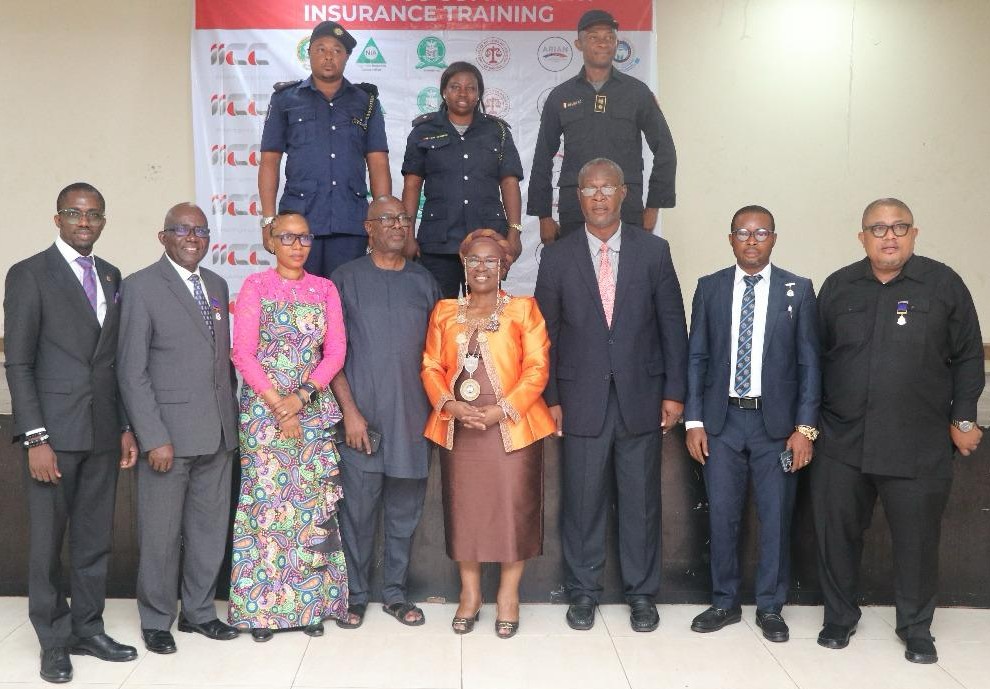
IICC Trains Enugu Workers On Compulsory Insurances

Published

on

By

As part of efforts to promote insurance awareness and penetration throughout the country, the insurance industry has organised insurance training session for workers in Enugu State.

President Bola Tinubu, signed the Nigerian Insurance Industry Reformed Act (NIIRA) 2025 into law in July 2025. The Act is expected to reform the insurance industry, ensure Nigerians enjoy the benefits of insurance which is a catalyst to growing the Nigerian economy.

To this end, the Insurance Industry Consultative Council (IICC) under the leadership of its Chairman. Mrs. Yetunde Ilori, led all arms of the industry, including NAICOM, NIA, NCRIB, ILAN, ARIAN and CIIN to Enugu where the delegates from various ministries of the State Government were educated about the benefits of embracing insurance.

Mrs. Ilori said that the industry thought it was necessary for Enugu to feel the industry, noting that the State Government under the leadership of the Governor, Peter Mbah has been so involved promoting compulsory insurances in the State. She also appreciated the Government for supporting the training by approving the attendance of its workers.

The President of ILAN, Mr. Ikechukwu Udobi addressed the delegates as being privileged to have been selected out of many to attend the training.

Speaking on behalf of the Government, the Secretary to the State Government, Professor Chidebere Onya appreciated the industry for deeming it fit to train the citizens of the Coal City State on benefits of insurance. He stated that insurance is indeed a catalyst to growing the State’s economy and the Government is definitely going to take advantage of this.

The delegates applauded the IICC for the thoughtful training with the caliber of experienced experts who delivered several informative and innovative papers on compulsory insurances.

Mr. Tope Adaramola, who represented the NCRIB acknowledged the faculties and the delegates for their contributions towards the success of the training, submitting that the IICC is so expectant of feedback from the training and hoping see the economy of Enugu grow through the adoption of compulsory insurances.

Continue Reading